
Our History
Vision impaired table tennis began in Sydney in 1958 and has been played in Victoria for more than sixty years. This is the story of the game, from one modified table to clubs across the state.
How the Game Was Invented, 1958
The game began in Sydney in 1958, when Ray Hannah devised the sport that became known as Swish. Ray was working in a home for ex-servicemen who had been blinded during the Second World War. Many of the residents spent their days with little to occupy them. When Ray talked with them about their lives before they lost their sight, he found that several had been keen table tennis players. Those conversations set him thinking. He came to see how much it would mean for the men to play a game on genuinely equal terms, one in which sight gave no advantage.
To make the game possible, Ray had a modified table tennis table built and reshaped the bat so that players could strike the ball more easily. He found a ball with holes in it and fitted it with bells, so that players could follow a rally by sound. Rules were written down, and the game steadily evolved from there. Once it was up and running, sighted people often came along to play as well, and found themselves competing on the same footing as everyone else.
The 1960s: The Game Spreads
Through the 1960s the game spread quickly. It was being played in Townsville by 1961, and around the same time it reached Melbourne. Early in the decade Arthur Nothling started the game at Kooyong, and it was also played at the Royal Victorian Institute for the Blind at Burwood. Tournaments were soon being held between the Burwood and Kooyong groups, and a table was set up at the institute's training centre on St Kilda Road. In Sydney, the game was played at Shirley House, where regular sessions continued until around 2012.
The game also began to travel overseas. Ivan Molloy took it to Sri Lanka, where it was played on a different kind of table, with a shallow gutter running around the full edge including the ends. The rules there differed slightly too.
The 1970s: Clubs, Competitions and Cassettes
By the 1970s the game was being played in many Australian states. In Victoria, sessions were held at Ray Hannah's own home, at Kooyong, and at Malvern. The Malvern venue was provided by the Lady Nell Seeing Eye Dog School, which later became Seeing Eye Dogs Australia and is today part of Vision Australia. At Malvern, players wore blindfolds in their local competition so that everyone competed on equal terms, and in 1978 Kooyong and Malvern came together for a tournament.
The decade also saw the game become better organised. In 1979 Peter Scanlon recorded the rules onto cassette, making them accessible to blind players, and the same year groups travelled to Adelaide and Brisbane for social games. Also in 1979, Terry Carlson set up a club at the Railway Institute. The club moved to Ray Hannah's home in 1980. Overseas, the game was being played in Singapore in the late 1970s. As in Sri Lanka, the table had a gutter and the rules were slightly different. One local rule was that players were not allowed to serve or play the ball too hard.
In the sport's early years in Victoria, the Association for the Blind, now Vision Australia, arranged volunteer drivers through the Red Cross to get players to sessions.
The 1980s: Leagues and National Tournaments
The 1980s were a period of growth and organisation. The Victorian Swish League was formed in 1980. Its name came from Swish, the game's original name. That year a national tournament was held over the Australia Day weekend, contested by teams of two or four players from Malvern, Kooyong, Ray Hannah's group and Tasmania. The same year, a large group began playing at the Association for the Blind's George Vowell Centre at Mount Eliza. National tournaments followed in Adelaide, in Brisbane and at the University of Melbourne.
The game kept evolving so that more people could take part: Peter Rickards developed a modified table that allowed residents of aged care facilities to play. In 1981 the game was introduced at a school for the blind in Sri Lanka, alongside carpet bowls and cricket.
One of the largest clubs of the era was at Frankston. In the early 1980s it had around 104 members and played on Sundays from noon to 6:00 PM. About 80 of those members were sighted players, recruited partly through radio announcements, who took part alongside the blind and vision impaired members.
The 1990s: A Quieter Decade
The 1990s were a quieter time for the game in Victoria. The Malvern club closed during the decade because it did not have enough players. The Kooyong Swish Club, as the Kooyong group was known, also closed, partly because of falling numbers and partly because of refurbishment work at Kooyong.
2001 Onward: From Vic Swish to VVITTA
The new century brought a fresh wave of organisation. In April 2001 Terry Carlson formed Vic Swish at the Seeing Eye Dogs Australia premises, and in 2004 it moved to Kooyong. In 2015 Vic Swish was renamed Swish Victoria. By this time the game was being played by clubs and groups across Victoria, at Bendigo, Croydon, Dandenong, Kooyong, Mildura, Moreland, Mornington, Sale and Shepparton, as well as on a handful of tables in schools.
In 2017 Swish Victoria adopted a new name that better described the sport it governed: the Victorian Vision Impaired Table Tennis Association, or VVITTA. In 2018 VVITTA became independent of Kooyong. Its affiliated clubs at that time were Croydon, Dandenong, Kooyong and Moreland, while the remaining groups continued to run independently. On Tuesday 6 October 2026 VVITTA became an incorporated association, and its legal name is now Victorian Vision Impaired Table Tennis Association Incorporated.
VVITTA Today
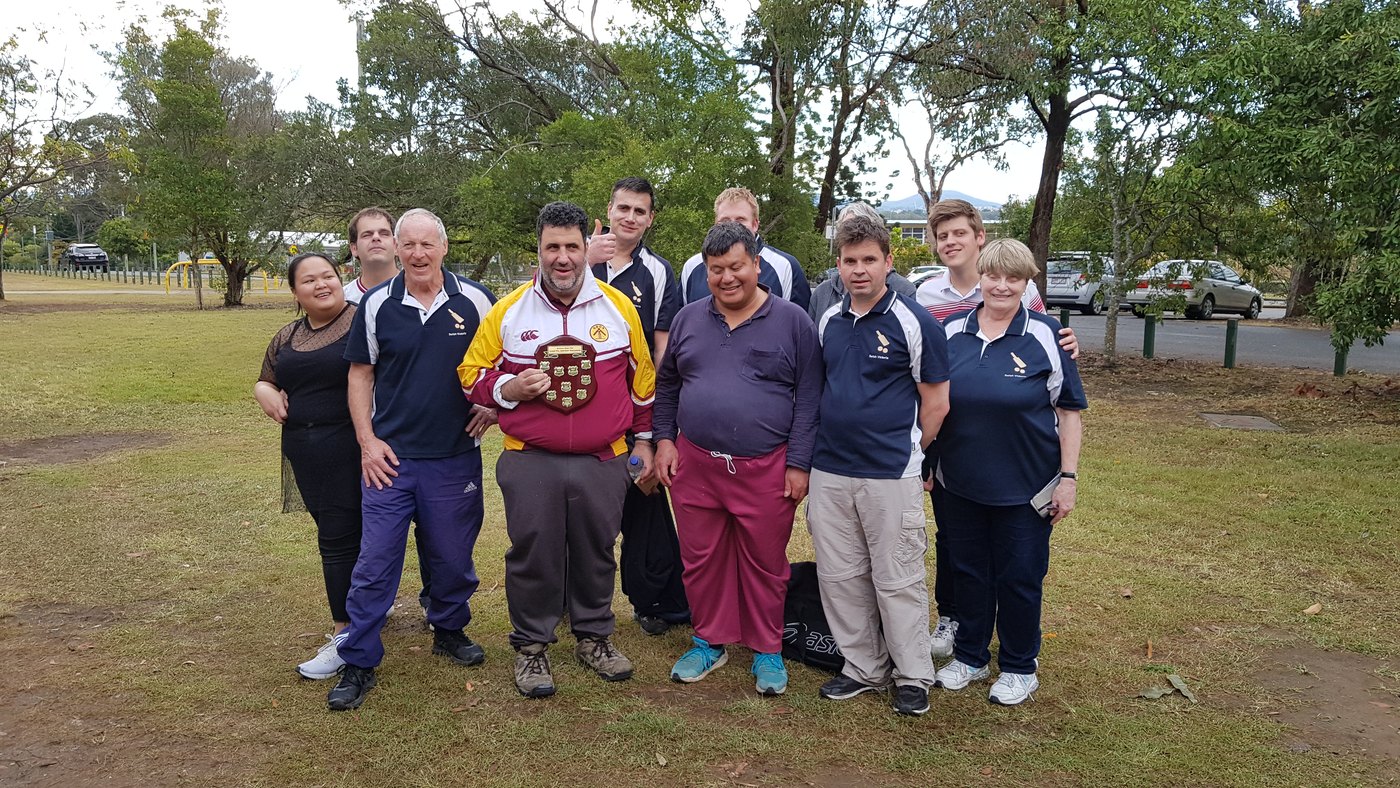
Today VVITTA is the umbrella body for vision impaired table tennis clubs across Victoria. Five of the clubs are represented on the committee by a club delegate, and members play every week. The clubs currently running are:
- Kooyong, on Saturdays
- Dandenong, on Mondays
- Brunswick and Coburg, on Mondays or Wednesdays in alternate weeks
- Frankston, on Wednesdays
- Boronia and Mooroolbark, on Thursdays
- Keilor and Geelong, on Tuesdays and Fridays, run by Tri All Abilities Sports Club
Groups also play at Bendigo on Thursdays and at Mildura on Mondays, through programs associated with Vision Australia. Venues, times and contacts for every club are on the Where to Play page.
The sport reaches beyond the club room. In May 2023 the association returned to the Grand Prix Interstate Tournament against Queensland, and travelling north in the last week of May is now a regular part of the VVITTA year. Victoria won the Grand Prix in both 2025 and 2026. Growth continues too: planning is under way for a new VVITTA affiliated club in Melbourne's north west, and there are hopes of starting a new club in Shepparton in 2027.
The Names We Play For
Two tournaments on our calendar carry the names of people, and both of those people belong in this history.
The Ray Hannah Shield is played every November at Vision Australia, Kooyong. It carries the name of the man whose idea started all of it in a Sydney home in 1958. Ray is the reason there is a club to turn up to on a Saturday, and the reason there is a sport to play when you get there. The 2026 Shield was won by Cebby Johnson and Sam Perrett, and the 2025 Shield by Marco Curralejo and Tony Behrendt.
The Margaret Shanahan Blindfold Tournament will be played every February at Vision Australia, Kooyong. The first one under that name is on Saturday 6 February 2027. Marg Shanahan, 21 June 1966 to 4 November 2025, was a player, an umpire, a committee member, and co-editor of the VVITTA Rules in 2019. The Blindfold Tournament was the one she loved, and at the 2026 Annual General Meeting the members voted unanimously to bring it back and to put her name on it.
There is a neatness to that choice that Marg would have enjoyed. Blindfold play is not a novelty invented for the occasion. It is how the Malvern club ran its local competition in the 1970s, so that everyone at the table competed on exactly equal terms. Reviving it in her name puts one of the oldest habits in Victorian Swish back on the calendar.
From a single modified table in a Sydney home for war blinded veterans, the sport has become a lasting part of life for blind and vision impaired players across Australia. Its history is still being written by the clubs, volunteers and players who carry the game forward today, and you can see some of them on our Photos page.